

How to Set Boundaries Without Feeling Guilty
A Trauma-Informed, Attachment-Aware Guide for Young Women and Couples
For many young women and young couples I work with, boundaries aren’t hard because they don’t know how to set them. They’re hard because boundaries bring up guilt.
Guilt for saying no. Guilt for disappointing someone. Guilt for choosing yourself instead of keeping the peace. Very often, that guilt isn’t really about what’s happening in the present moment. It’s about what boundaries once meant for them earlier in life.
This blog isn’t about scripts or rigid rules on how to set boundaries. It’s about understanding why boundaries feel so emotionally loaded, and how therapy can help you set boundaries that feel authentic, and connected to your actual needs, rather than overwhelming.
Why Boundaries Can Feel Unsafe
One of the most important conversations I have with clients is about how we learned what safety means when we were growing up.
As children, safety always depended on our attachment figures (or parents or caretakers). If they were okay, we were okay. If they were calm, pleased, or emotionally regulated, we felt secure.
Many of us learned through experience, without anyone saying it out loud, that staying connected (protecting attachment) meant being agreeable, pleasing, minimizing your own needs, and prioritizing others’ emotions to not rock the boat and protect that bond. So, from an attachment perspective, this wasn’t a flaw. It was a survival strategy deeply wired in our human brains.
So when you try to set a boundary as an adult, your nervous system may react as if you’re risking connection, even when you logically know you’re not. Does that make sense?
The Core Struggle: Authenticity vs. Attachment
This is one of my favorite things to name gently in therapy:
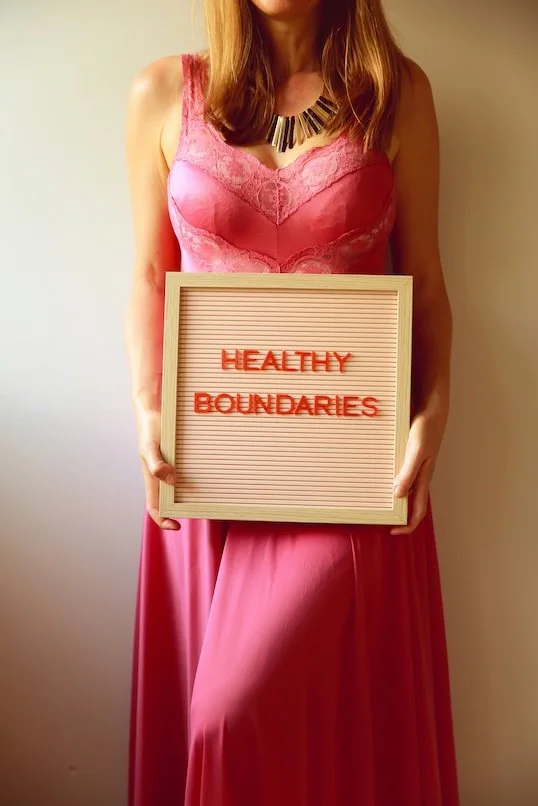
“Boundaries feel hard because they ask you to choose authenticity in places where you once had to choose attachment in order to stay safe.”
This is why guilt shows up so strongly. Not because you’re weak, but because your body remembers a time when being honest or having needs felt (or was!) risky.
Some common fears that my clients experience unconsciously about boundaries are:
What if I lose this person?
What if I’m seen as difficult?
What if choosing myself makes me unlovable?
Updating the Meaning of Security
One of the most powerful shifts I like to offer clients is the idea that the definition of security can be updated. The version of safety you needed as a child is not the version you need now, since you no longer live in the same reality.
Old security looked like:
Keeping others comfortable
Avoiding conflict
Suppressing your needs
Earning connection through self-sacrifice
New security looks like:
Staying connected to yourself
Trusting your emotional truth
Knowing you can tolerate discomfort
Building relationships that can hold honesty
When this shift happens, boundaries stop feeling like a big risk, and start feeling like a form of self-respect that’s secure
Why This Is Especially Hard for Women
Boundary struggles don’t happen in a vacuum. They happen inside culture. From a young age, many women are socialized to be accommodating, emotionally available, and responsible for maintaining harmony. Assertiveness is often labeled as selfish or unkind.
So when a woman sets a boundary, the guilt isn’t just personal, it’s layered with gendered expectations and social conditioning.
Understanding this helps clients stop blaming themselves. Difficulty with boundaries isn’t a personal failure; it’s a predictable response to how women are taught to relate and move around in the world. Can you relate?
What Guilt Is Actually Telling You
In therapy, we work on separating guilt from truth. Guilt doesn’t always mean you’re doing something wrong. Often, it means you’re doing something new.
Guilt tends to show up when you:
Step out of old relational roles
Stop managing other people’s emotions
Choose alignment with your own needs (authenticity) over approval
From an attachment-informed lens, guilt often signals unfamiliarity, not real danger.
What Research Tells Us
Attachment research supports this experience. A study published in APA PsychNet by psychologists Mikulincer and Shaver found that people with more secure attachment styles are better able to assert needs without excessive guilt, while those with anxious attachment are more likely to sacrifice their needs to preserve connection.
In other words, boundary struggles aren’t about willpower, they’re about attachment patterns. And attachment patterns can change.
How Therapy Helps You Build Boundaries Without Guilt
In my work with young women and couples in New York, boundary work often becomes a turning point. Therapy for setting boundaries helps clients:
Understand where people-pleasing began
Explore attachment patterns
Reconnect with emotions and needs
Practice boundaries in a safe, supportive relationship
Build self-trust so boundaries don’t feel like a risk
Boundaries become less about managing others, and more about staying connected to yourself.
For Couples: Boundaries Support Intimacy
In couples therapy, unclear boundaries often lead to resentment, emotional burnout, and conflict. Instead, clear boundaries allow partners to say:
This is what I need
This is where I need space
This is who I am
Rather than creating distance, boundaries create clarity and connection. Because clarity supports trust and intimacy.
If setting boundaries brings up guilt or fear, it doesn’t mean you’re doing something wrong. It means you’re learning to choose authenticity in places where attachment once meant survival.
That’s not selfish. That’s growth!

Thinking About Starting Therapy?
If you’re a young woman or couple in New York struggling with boundaries, people-pleasing, or guilt, therapy can help you reconnect with your needs, learn new tools, and build relationships that feel reciprocal, respectful, and secure.
You don’t have to choose between being authentic and being loved. With the right support, you can have both. Reach out today to schedule a free, zero pressure phone consultation to see if we can help you in any way. We want to hear from you!
